

Why Brand Energy is the New Currency of Brand Building

Brand Energy is the new currency of brand building
In a crowded market, standing out is no longer just about having the biggest budget or the sharpest creative. It’s about energy. Brands with energy feel alive – they radiate momentum, spark curiosity, and make people want to get involved. Energy is what creates excitement, what fuels growth, and what keeps a brand front of mind.
In his book Brand Momentum, our CEO Tony Lewis explores how the perception of growth directly impacts actual business growth. He introduces the idea of a Brand Velocity Score, a measure that shows how current perceptions of growth can accurately predict future brand consumption. The takeaway is powerful: when communications feel energetic and exciting, they don’t just capture attention, they create a sense of momentum. Customers see the brand as youthful, relevant and growing – even if the product itself hasn’t changed. In short, brand energy doesn’t just reflect growth; it helps generate it.
But if energy is the new currency of brand building, there’s a challenge that often gets overlooked: the lifecycle of messaging.
The Problem with Messaging Lifecycles
Every piece of brand messaging has a lifecycle. It starts fresh, compelling and relevant. But over time, familiarity dulls its impact. Messages that once felt bold become wallpaper. Campaigns that generated buzz start blending into the background.
And the research backs this up. Studies on advertising wear-out suggest that campaigns typically begin to lose effectiveness after just 8–10 weeks in market, depending on frequency and audience exposure. Nielsen’s analysis of ad effectiveness found that creative fatigue can reduce brand recall by as much as 20% over the course of a campaign.
When a brand doesn’t recognise this lifecycle, it risks appearing flat, repetitive, or even out of touch. The result? Energy drains away, and with it, the sense of growth and excitement that customers are drawn to.
Take Apple, for instance. Its annual product launches are a way of resetting energy just as messaging risks plateauing. Even if the updates are incremental, the communication around them is designed to reignite excitement. Similarly, Nike has managed to keep its decades-old Just Do It slogan vibrant by constantly embedding it in new cultural moments, from grassroots sports stories to global social movements.
Just like businesses track economic cycles to plan investment, marketers can track messaging cycles to manage brand energy. The key is not to fight the cycle, but to ride it – using new creative sparks, refreshed language, or cultural hooks to inject energy at the right time.

From Consistency to Energy and Momentum
Traditionally, marketers have been taught to stick with a consistent message to build recognition. While consistency has its place, over-reliance on static messaging ignores the reality that audiences change – their expectations, moods, and cultural context shift faster than ever before.
This is where the idea of brand momentum, as outlined by Tony Lewis, becomes so relevant. Momentum combines direction (the clarity of where the brand is heading) with velocity (the speed and energy of its movement). In other words: it’s not just what you say, but how you keep it moving.
Brand energy is the spark that fuels that momentum. It keeps messaging alive, stops it stagnating, and ensures that the brand feels like it’s always moving forward – not standing still.
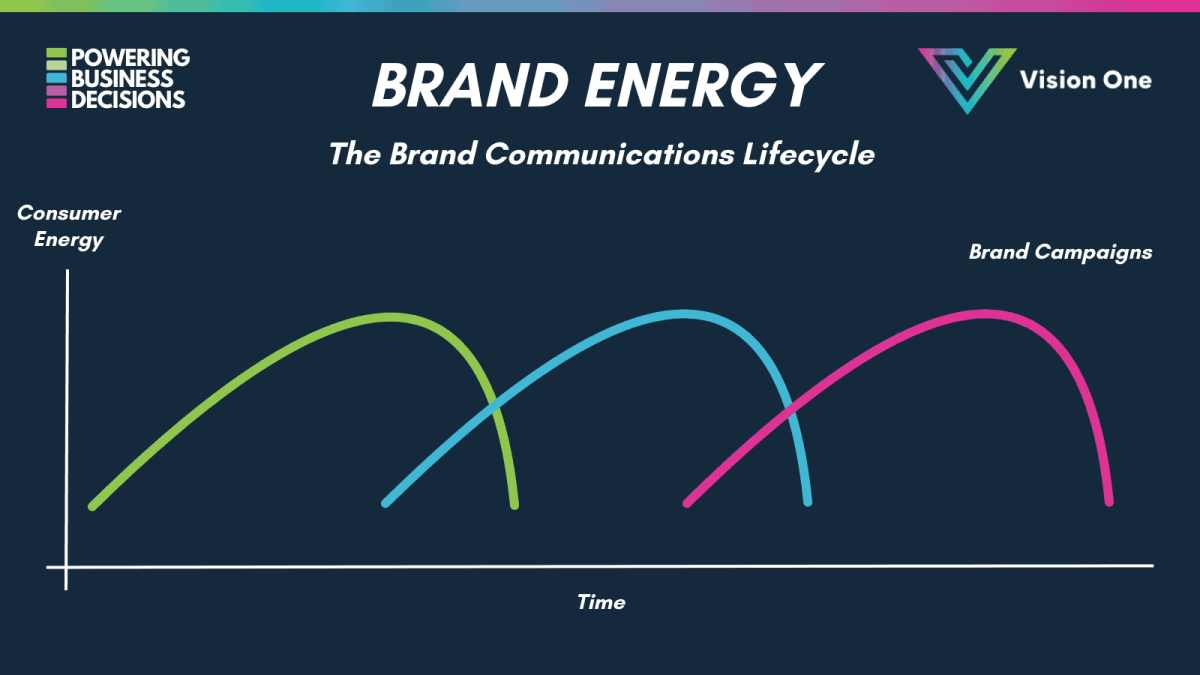
The Lifecycle Graph: Energy in Waves, Not Straight Lines
If you map messaging lifecycles onto a graph, the curve looks remarkably like a standard business lifecycle:
- Introduction / Growth – The launch of a new message sparks attention, curiosity, and rising engagement.
- Peak – Energy is at its highest. The message feels fresh, relevant and impactful.
- Plateau – Audiences are familiar. Recall remains strong, but excitement begins to level out. Think of how Nike avoids plateau by refreshing its storytelling across different cultural contexts.
- Decline – Fatigue sets in. Repetition reduces attention, energy drops, and the brand risks fading into the background. Apple sidesteps this stage by carefully orchestrating new bursts of energy through its launch cycle.
Just like businesses track economic cycles to plan investment, marketers can track messaging cycles to manage brand energy. The key is not to fight the cycle, but to ride it – using new creative sparks, refreshed language, or cultural hooks to inject energy at the right time.
Injecting Energy into Brand Building
So, how can businesses use brand energy as a practical tool?
- Track the lifecycle – Be conscious of when a message is peaking, plateauing, or fading. Don’t wait until it’s flat to act.
- Refresh before it’s too late – Adjust language, tone or creative execution while keeping the core brand consistent. A fresh spark can reignite attention.
- Think in waves, not lines – Instead of treating messaging as a single thread that runs indefinitely, treat it as a series of energy waves, each building excitement and growth.
- Align with growth moments – Energy is most effective when it matches business momentum – new launches, expansions, or cultural trends.
Big Brands, Big Energy: Who’s Doing it Well?
Some of the world’s most recognisable companies have mastered the art of refreshing their messaging at the right time to maintain energy and create the perception of growth:
- Nike – Just Do It is one of the most enduring taglines in marketing, but Nike keeps it alive through energetic waves of storytelling. From spotlighting everyday athletes to aligning with cultural movements, the brand continually injects new life into a familiar message.
- Apple – Apple’s product launches are a masterclass in brand energy. While its promise of innovation is consistent, each launch is staged as a cultural event. This creates the perception of ongoing momentum, even when the product update itself is small.
- Coca-Cola – Coca-Cola regularly reinvents its timeless promise of happiness and togetherness. Campaigns like Share a Coke transformed an old idea into something culturally fresh, sparking new waves of attention and connection.
- Tesla – Without traditional advertising, Tesla generates energy by tying its communications to bold innovation narratives. Messaging around disruption, sustainability, and future-focused technology fuels a sense of momentum that keeps the brand culturally relevant.
These examples underline the principle: the brands that feel most energetic are the ones that refresh at the right moments, aligning messaging with cultural shifts, launches or growth stories.
The Payoff: Perception of Growth
Audiences are drawn to brands that feel like they’re going somewhere. When messaging stays energetic, customers perceive the brand as vibrant, progressive and growing – even before the balance sheet reflects it. We call this brand magnetism.
That’s the real power of brand energy: it shapes not just what people think about your brand today, but the belief that you’re moving forward tomorrow.
Closing thought:
As Tony Lewis’s work shows, brands that win create momentum by combining clear direction with velocity. Brand energy is what fuels that velocity – keeping messages fresh, vibrant, and full of life. Brands that manage their messaging lifecycles with energy don’t just maintain attention – they build unstoppable momentum.
Contact Us
We are quick, responsive, and above all, our research is customised precisely to your needs, ensuring you get exactly what you need every time.
Email us at mail@visionone.co.uk
Complete the enquiry form.
Or book a meeting below.
Powering Business Decisions
Latest News
Keep up to date with the latest news and posts from Vision One