

A Guide to Tenant Satisfaction Measures (TSMs)

Understanding Tenant Satisfaction Measures – and how to turn them into insight
Written by Vision One Research
If you work in social housing, you’ll know how much the world has shifted in the past few years. The introduction of Tenant Satisfaction Measures (TSMs) by the Regulator of Social Housing (RSH) is one of the biggest changes yet — designed to make sure tenants’ voices are genuinely heard, and that landlords can be held to account for the services they provide.
But while the new framework might sound like another layer of regulation, it’s also an incredible opportunity. Done well, TSMs can help you understand what really matters to tenants, show where you’re doing well, and highlight where you can improve. In other words, they can become a tool for building stronger relationships, not just ticking boxes.
What the TSMs actually cover
There are 22 measures in total, covering five main themes. Twelve of these are based on tenant perception – gathered through surveys – while the other ten come from your internal management information.
- Overall satisfaction
- Keeping homes in good repair
- Maintaining building safety
- Respectful and helpful engagement
- Dealing with complaints and neighbourhood issues
TSM Questions include:
- How satisfied are you with the overall service from your landlord?
- Does your landlord listen to your views and act upon them?
- How satisfied are you with the repair service?
The results will help the regulator and tenants compare performance between landlords, but also give you invaluable feedback about how people really feel about your organisation.

The Regulator of Social Housing published the first year results of the TSMs, which you can find here at Gov.uk.
Getting the survey right
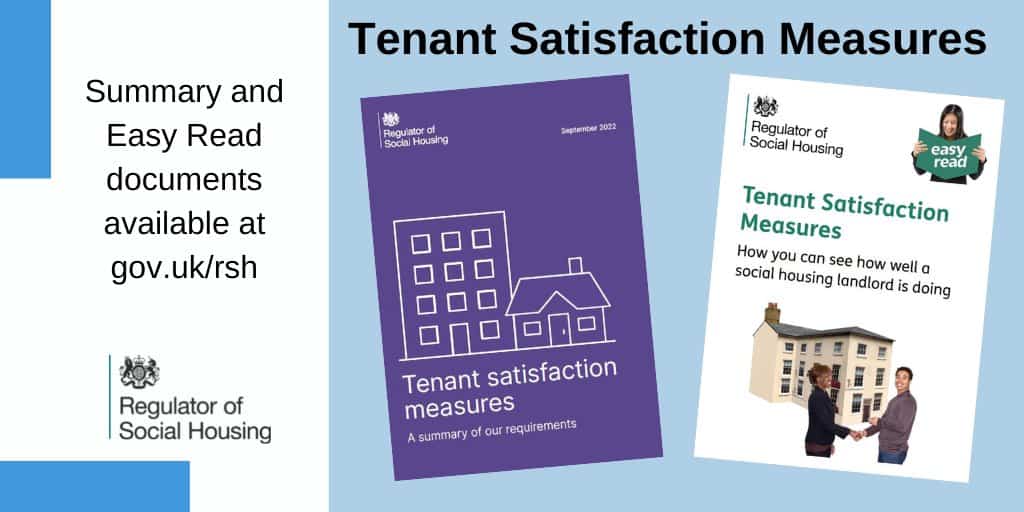
Tenant Satisfaction Measures – Summary of what we need from landlords (easy-read version)
The perception survey sits at the heart of the new measures. To make sure it’s compliant and useful, there are a few important things to get right:
- Ask the right questions: The regulator has set out 12 required questions which must be asked exactly as written.
- Reach the right mix of people: Your survey needs to reflect your tenant population – across ages, backgrounds, and property types.
- Choose the right method: Surveys can be done online, by phone, face-to-face or by post. What matters most is that they’re inclusive and accessible.
- Be transparent: When you publish results, you’ll need to share how the survey was carried out – including response rates, sample size, and any weighting.
- Keep it consistent: Landlords with more than 1,000 homes must run surveys every year; smaller providers can do them every two years.
Need the insights to make smarter, more confident decisions?
Get in touch for a fast, tailored proposal of
email us at mail@visionone.co.uk
or call us on 0203 693 3150
Powering Business Decisions
Latest News
Keep up to date with the latest news and posts from Vision One


