

OKR – Objectives and Key Results
OKRs and KRs Explained
1. What are OKRs?
Objectives and Key Results (OKRs) are a simple framework for setting ambitious goals and measuring success. They help Vision One focus on what matters most, align teams around shared priorities and track progress through measurable outcomes rather than activities. OKRs are typically set quarterly and reviewed regularly to maintain momentum and adapt as priorities evolve. They often form an important part of our Brand Tracking studies and brand strategy and performance monitoring services.
2. Objectives and Key Results
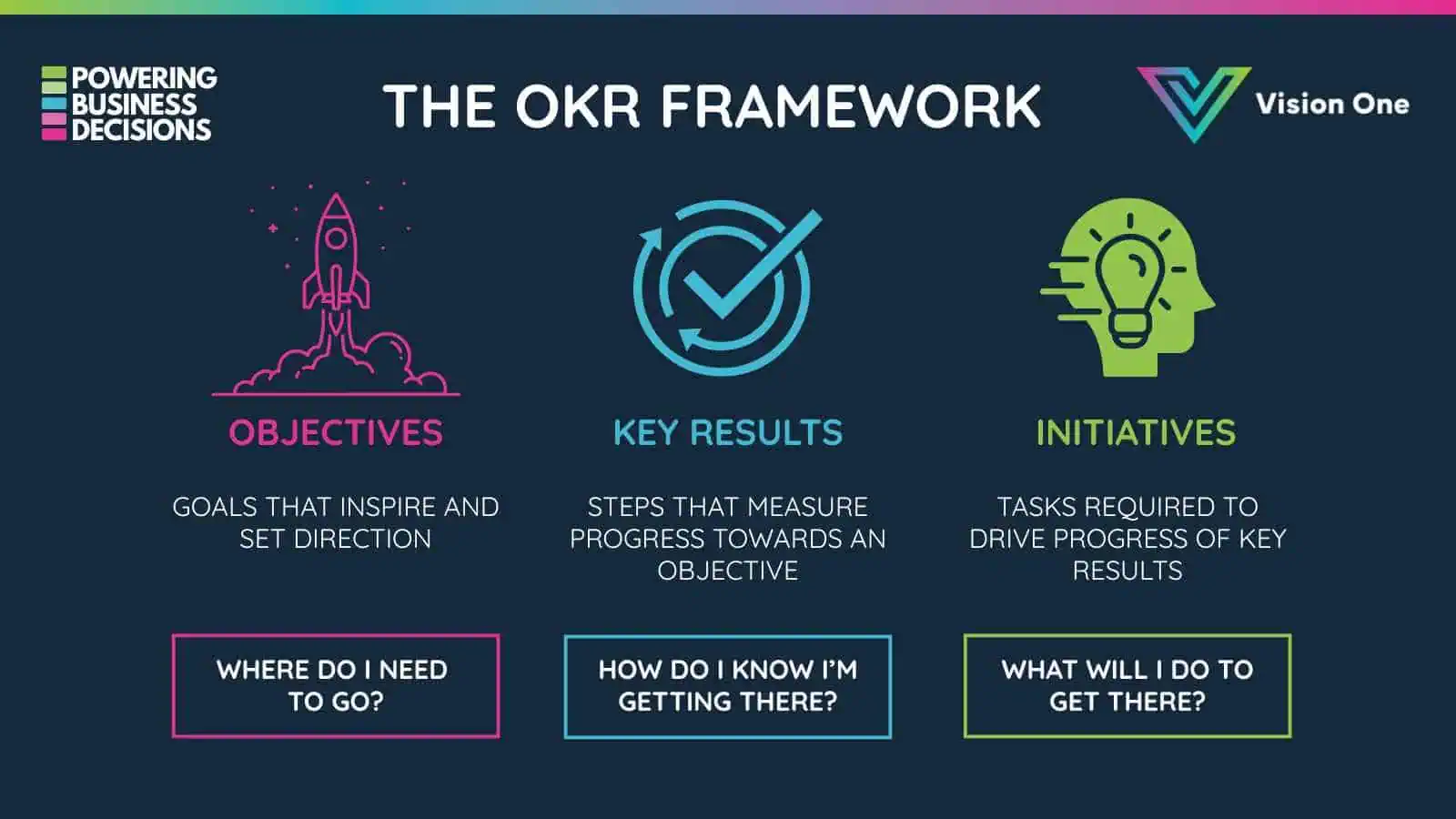
Objective (O)
An Objective describes what we want to achieve. It should be clear, inspiring and qualitative rather than numerical.
Example: Become the UK’s most trusted insight partner for healthcare organisations.
Key Result (KR)
Key Results define how we know we’ve achieved the Objective. They should be measurable, outcome-focused and challenging, with typically 2–5 Key Results supporting each Objective.
Examples:
- Increase new business enquiries by 20%.
- Achieve a client satisfaction score of 9.2/10.
- Win £500k of new business.
3. Supporting Terms
Initiatives are the projects and activities undertaken to achieve the Key Results. They describe what we do, whereas Key Results describe what changes.
KPIs (Key Performance Indicators) monitor the ongoing health of the business, such as revenue, profit, website traffic or client satisfaction. Unlike OKRs, KPIs measure business performance rather than driving strategic change.
Metrics are the data used to measure progress, while a Baseline is the starting point and a Target is the desired level of performance by the end of the OKR period.
4. Tracking Success
OKRs should be reviewed regularly—typically monthly—with a formal quarterly review to assess progress and set new priorities. Success is measured by the achievement of the Key Results, not simply by completing activities.
Well-written Key Results focus on outcomes rather than outputs.
Output: Publish six thought leadership articles.
Outcome: Generate 50 qualified enquiries from thought leadership.
Ambitious OKRs are encouraged. Achieving around 70–100% of a stretch target is often considered successful, provided it has driven meaningful progress and learning.
5. Best Practice Principles
- Objectives should inspire; Key Results should measure.
- Focus on outcomes, not activities.
- Limit Objectives to maintain focus.
- Use 2–5 measurable Key Results per Objective.
- Align team OKRs with Vision One’s strategic priorities.
- Review progress regularly and adapt where needed.
- Use data wherever possible.
- Learn from missed targets as well as achieved ones.


